CT scans vs. MRIs: What are the differences? And which one is best for your pet?
Last updated: 19 Dec 2025
301 Views
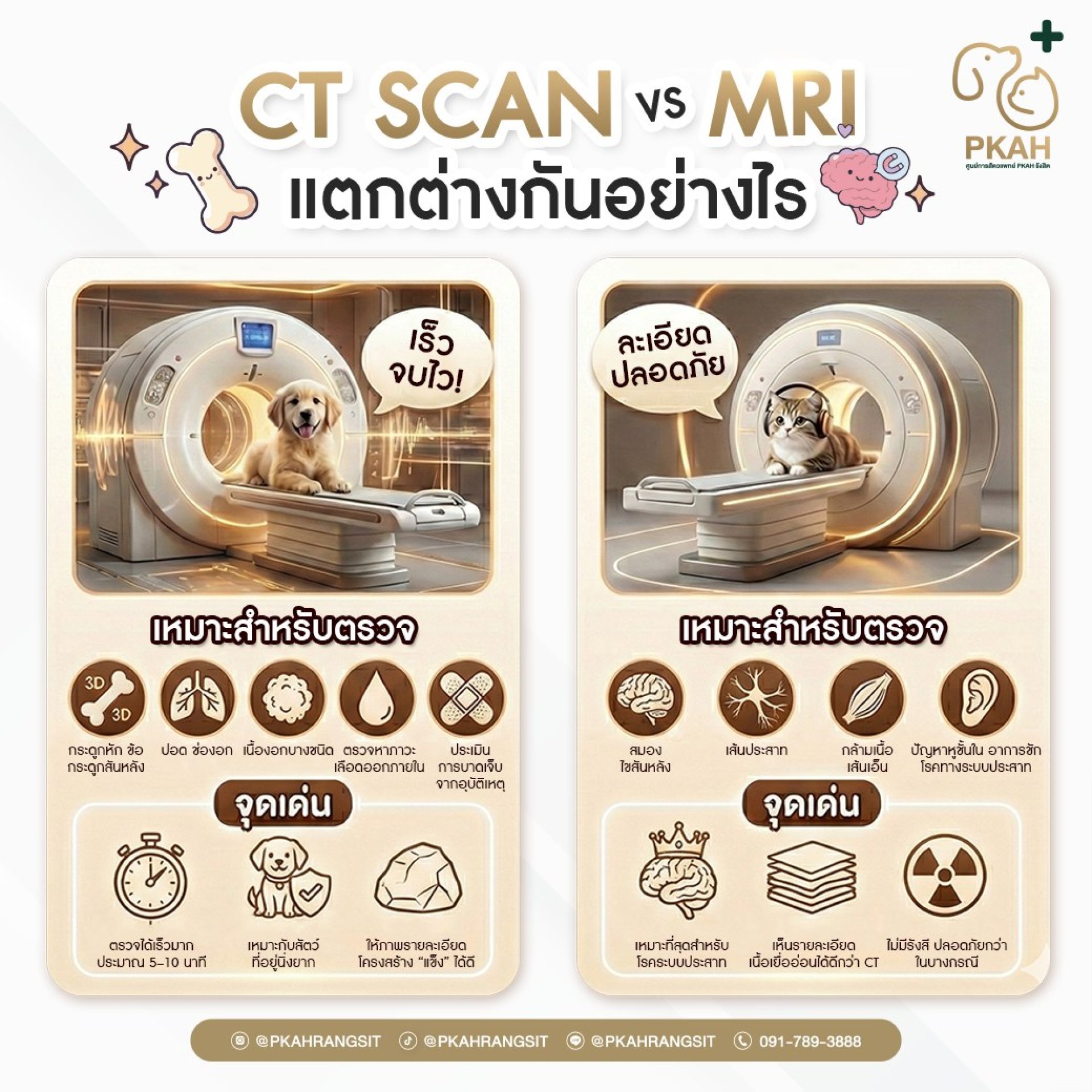
What is the difference between CT Scan vs MRI? And which one is best for your pet? When a dog or cat has symptoms that require a thorough examination, many people are often confused about whether to choose a good CT scan or a good MRI. Today, PKAH Veterinary Center explains an easy-to-understand model with cute illustrations so that the owner can make a more confident decision. CT Scan (CT scan) is suitable for the desired examination. The speed and rigidity of structures such as bones, lungs, ventricles, abdominal cavities, bleeding or accident assessments take a short time, about 510 minutes. It is ideal for those who are not stationary for a long time or have an emergency MRI (MRI). It is suitable for high-resolution examination, especially of organs of the nervous system. For example, brain, spinal cord, muscle, inner ear or various diseases of the nervous system, the highlight is to provide a very sharp image, no radiation, safe in the long term. In short, CT = fast, suitable for bone-injury-bleeding MRI = fine, suitable for brain-spinal cord-nervous system at the veterinary center. PKAH We have a dedicated team of veterinarians ready to recommend the most appropriate screening for your pet, because every case is different, and we believe that the right diagnosis is the next step.
Related Content
การติดเชื้อพยาธิเม็ดเลือดในสุนัข มักเป็นกลุ่มเชื้อโรคที่แอบอยู่ในเลือดของสุนัข ( บางชนิดแอบในเม็ดเลือดแดง , เม็ดเลือดขาว , เกล็ดเลือด แล้วแต่ชนิดของเชื้อ ) มีเห็บเป็นตัวนำเชื้อ เชื้อเกี่ยวข้องที่พบได้บ่อยๆ คือ E.canis , Babesia , Anaplasma อาการของการติดเชื้อมีตั้งแต่ ซึม , ไม่ร่าเริง , กินอาหารน้อยลง , ตัวร้อน มีไข้ , มีจ้ำแดงที่เหงือกหรือตามตัว , ตัวเหลืองหรือดีซ่าน , เลือดกำเดาไหล , อึ ฉี่ อาเจียนเป็นเลือด
21 Dec 2025
ภาวะที่ร้ายแรง เนื่องจากตับมีบทบาทสำคัญหลายอย่าง เช่น การกำจัดสารพิษ การช่วยย่อยอาหาร และการสร้างโปรตีน หากตับทำงานผิดปกติจะส่งผลกระทบต่อทั้งร่างกาย
สัญญาณและอาการของโรคตับ เบื่ออาหาร และน้ำหนักลด อ่อนเพลีย ซึม สัตว์เลี้ยงมีพลังงานต่ำ นอนมากขึ้น ไม่กระตือรือร้น อาเจียน และท้องเสีย
ดีซ่าน สังเกตเห็น ผิวหนัง เยื่อเมือก เหงือก และตาขาวเปลี่ยนเป็นสีเหลือง กระหายน้ำและปัสสาวะบ่อยขึ้น
พฤติกรรมเปลี่ยนแปลง เนื่องจากตับไม่สามารถกำจัดสารพิษได้ มักแสดงออกเป็นอาการสับสน มึนงง เดินเซ กดศีรษะกับผนัง หรือมีอาการชัก
19 Dec 2025
โรคไตเรื้อรังในสุนัขและแมว (CKD) คือภาวะที่ไตเสื่อมการทำงานอย่างช้าๆ ทำให้ขับของเสียได้ไม่ดี พบได้บ่อยในสัตว์สูงวัย หรือสัตว์เลี้ยงที่มีความผิดปกติตั้งแต่กำเนิด
19 Jan 2026

